
Why Your Siding Keeps Turning Green Every Year (5 Fixes)

Proven Pressure Washing

Share this article

Siding turns green primarily due to algae, mold, and mildew growth fueled by moisture, shade, and organic nutrients. When North-facing walls remain damp and lack sunlight, these microorganisms thrive. Recurring growth often signals that previous cleaning methods didn't fully kill the spores, allowing them to rapidly return.

Why is my siding turning green every year?

If you live in Middle Tennessee, you are likely no stranger to the fuzzy green film that creeps across the side of your home every spring. While it may seem like a cosmetic nuisance, the recurring nature of this growth is actually a biological process tied to your home's environment. The most common culprit is green algae, specifically a type that thrives in humid, temperate climates like ours in Spring Hill.

At Proven Pressure Washing , we frequently see homeowners who are frustrated because they just cleaned their siding last year, only to have the green return even thicker this season. This happens because algae isn't just dirt; it is a living organism. If you simply "wash" the surface without actually killing the root of the spores, the microscopic remnants stay embedded in the texture of your vinyl or wood siding. As soon as the humidity rises and the sun hits a certain angle, those spores reactivate and spread across the surface again.

Tennessee's climate provides the perfect "petri dish" for these organisms. Our high humidity levels, combined with significant seasonal rainfall and warm temperatures, create a localized greenhouse effect on your home’s exterior. When moisture gets trapped against the siding, especially behind landscaping or in shaded areas, it provides the hydration needed for algae and mold to colonize. Without intervention, this growth can eventually lead to permanent staining or even damage to the underlying structure of your home.

Biological causes of siding discoloration

It is important to distinguish between the different types of organic growth that might be affecting your property. Not everything green is the same, and identifying what is growing on your house can help determine the best treatment method.

  • Green Algae: This is the most common growth. It is usually flat, slimy, and found on the North side of the house where the sun rarely reaches.
  • Mildew: Typically looks like small black or grey dots. It thrives in damp, poorly ventilated areas and is often found near leaky gutters or downspouts.
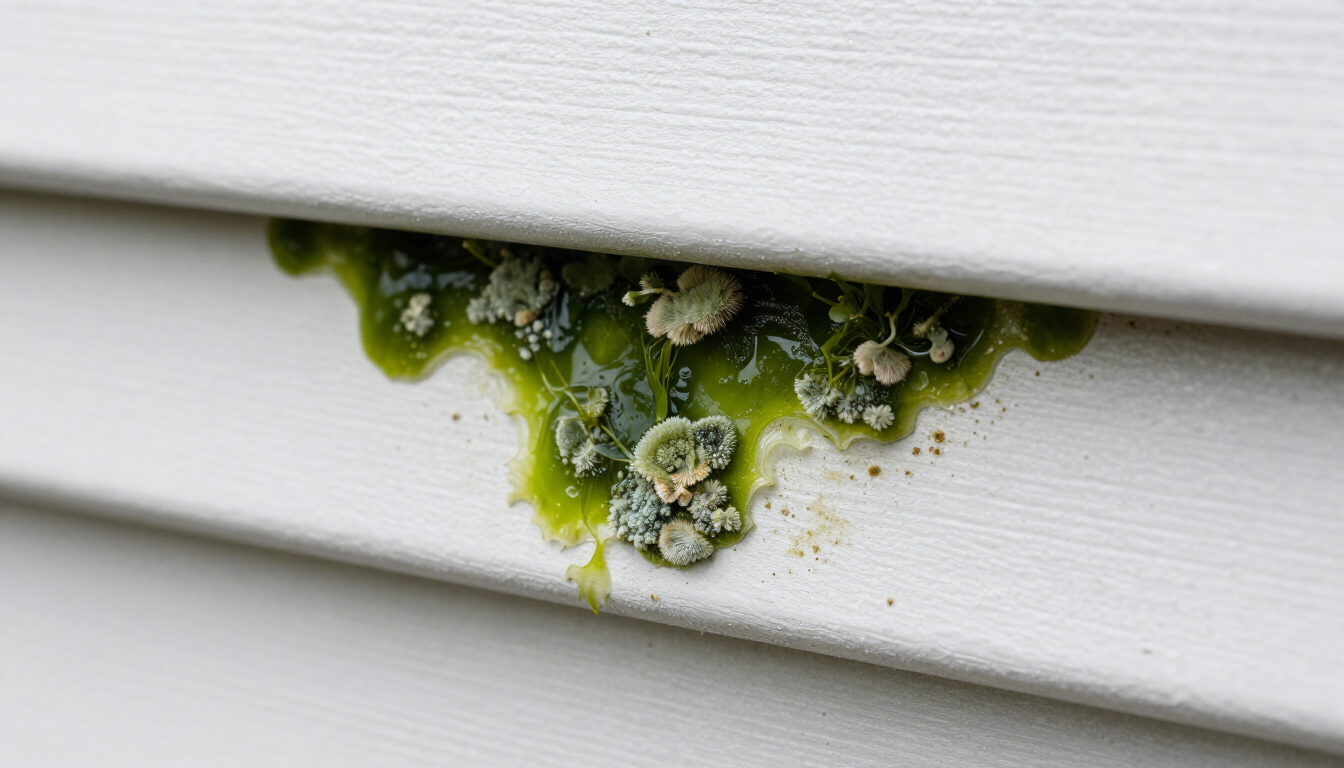
  • Mold: Often thicker and fuzzier than mildew, mold can range in color from green to black. It can actually feed on organic matter like dust and pollen trapped on your siding.
  • Moss: If you have wood siding or shingles, moss can take root in the crevices. Unlike algae, moss has a root system that can physically lift siding panels.
  • Lichen: A combination of algae and fungi, lichen is crusty and very difficult to remove without professional-grade cleaners.
Cleaning Algae

Why does the green stuff grow on the north side?

If you take a walk around your neighborhood, you will notice a pattern: the green growth is almost always concentrated on the North-facing side of every house. There is a simple scientific reason for this. The North side of a building receives the least amount of direct sunlight throughout the day. In the northern hemisphere, the sun travels across the southern sky, meaning the southern face of your home gets baked in UV rays which naturally disinfect and dry the siding.

The North side, however, stays cool and damp. When it rains in Spring Hill, the moisture on the North side takes much longer to evaporate. This persistent dampness is exactly what algae needs to grow. Furthermore, the lack of UV light means there is nothing to naturally kill the spores. This is why siding cleaning is most often requested for the back or side of a home rather than the front, depending on how the house is situated on the lot.

Does pressure washing damage vinyl siding?

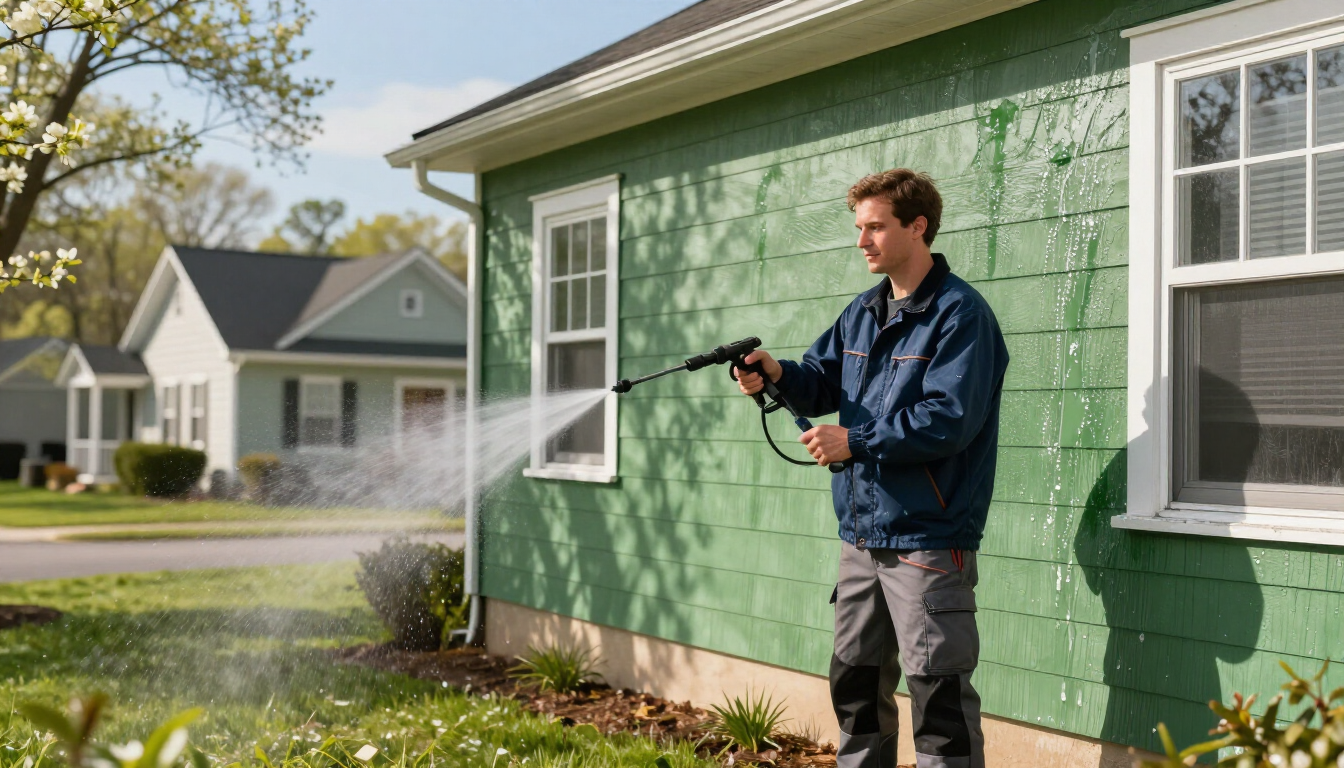
One of the biggest mistakes homeowners make when they see green siding is reaching for a high-powered rental pressure washer. While the name of our business is Proven Pressure Washing, we actually use a very specific technique for siding that involves low pressure. Using high PSI (pounds per square inch) directly on vinyl siding can lead to several expensive problems.

First, high pressure can force water behind the siding panels. When water gets trapped behind the vinyl, it creates a dark, wet environment against your home’s sheathing. This can lead to hidden rot and massive mold colonies inside your walls that you won't see until it's too late. Second, the force of the water can crack or chip vinyl, especially if the siding has become brittle from sun exposure over the years. Finally, high pressure alone rarely kills the algae; it just blasts the top layer off, leaving the roots behind to grow back even faster next time.

The difference between soft washing and pressure washing

To effectively treat siding, professionals use a method called "soft washing." This is the gold standard for residential exterior cleaning. Instead of relying on brute force to move dirt, soft washing relies on science. We apply a specialized, biodegradable cleaning solution that is designed to kill algae, mold, and mildew at the source. This solution is allowed to dwell on the surface, breaking down the organic matter and sanitizing the siding.

Once the solution has done its job, we rinse the house with a high-volume, low-pressure stream of water—similar to the pressure of a garden hose. This ensures that your siding is cleaned safely, without the risk of water intrusion or physical damage. Because the spores are actually killed rather than just moved around, your house stays cleaner for significantly longer than it would with a standard high-pressure wash. This same gentle technique is also used for roof cleaning to protect delicate shingles while removing those unsightly black streaks.

Microscopic View

How can I prevent siding from turning green?

While you cannot change the direction your house faces or the humidity of the Tennessee air, there are steps you can take to slow down the return of the green. Maintenance is key to protecting your investment and keeping your curb appeal high.

  1. Trim Your Landscaping: Overhanging branches and thick bushes near the siding block what little airflow and sunlight reach the North side. Keep plants trimmed back at least 12-24 inches from the house.
  2. Maintain Your Gutters: Leaky or overflowing gutters drip water down the face of your siding, providing a constant source of hydration for algae. Regular gutter cleaning is essential.
  3. Redirect Sprinklers: Ensure your irrigation system isn't spraying directly onto your siding. The mineral-rich water from sprinklers can also lead to staining.
  4. Annual Inspections: Walk around your home once a month. If you see the first signs of green, it is much easier to treat a small spot than a full-blown infestation.
  5. Professional Cleaning: Schedule a soft wash every 12 to 24 months. Regular treatments prevent the algae from deeply embedding itself into the siding material.

Professional siding cleaning benefits

Choosing a professional service like ours means you are getting more than just a clean house; you are getting peace of mind. As a family-owned, local business, we understand the specific challenges homeowners face in Williamson and Maury Counties. We use professional-grade equipment and eco-friendly solutions that are safe for your family, your pets, and your lawn.

Beyond just aesthetics, regular siding cleaning preserves the life of your home’s exterior. Organic growth can eventually cause vinyl to oxidize and wood to rot. By investing in professional services , you are preventing long-term structural damage. We also take care to protect your property, ensuring that your windows are rinsed and your plants are shielded during the process. Our motto, "Let us prove that Proven is your one-stop pressure washing company," reflects our commitment to quality and reliability for every Spring Hill neighbor.

Summary: Keeping your home exterior bright

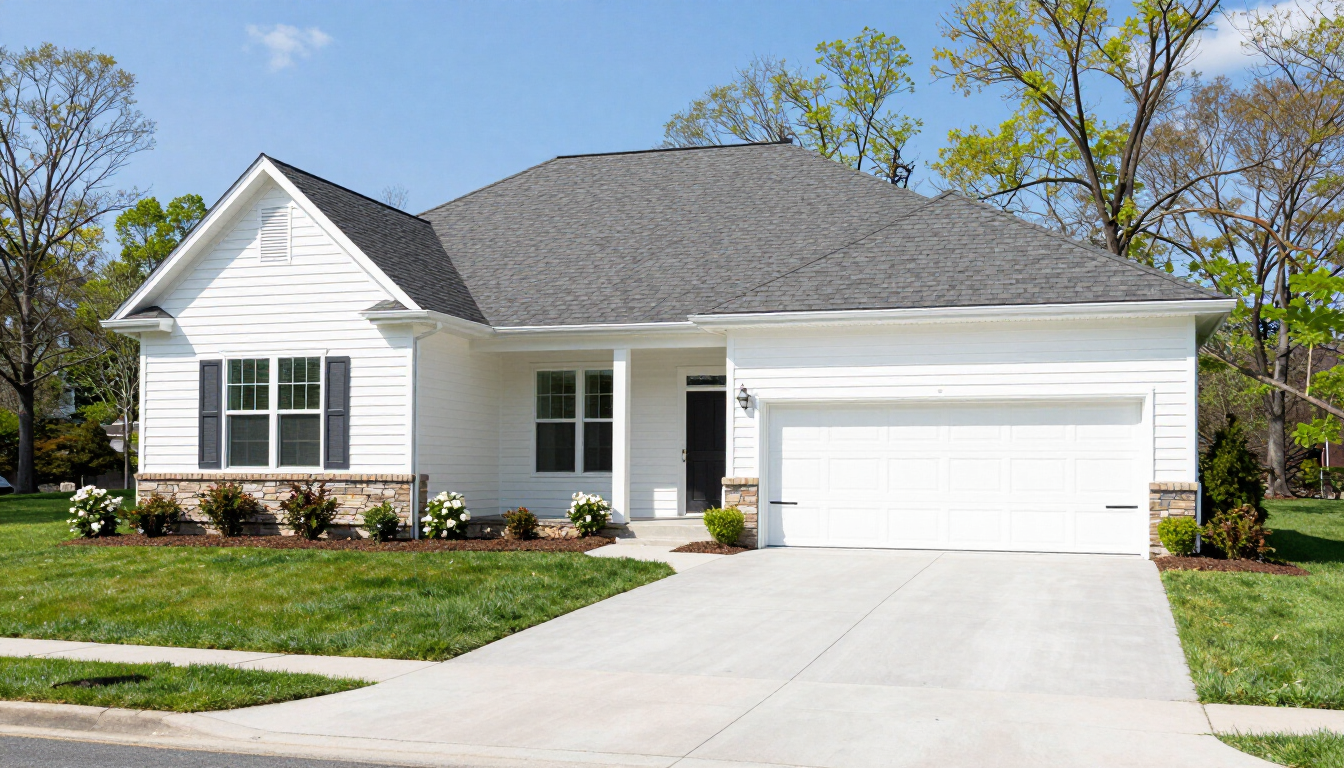
Understanding why your siding keeps turning green is the first step toward a permanently cleaner home. The combination of Tennessee's humidity, the lack of sun on North-facing walls, and the presence of live algae spores creates a cycle of recurring growth. Standard high-pressure washing often fails because it doesn't kill the root cause, leading to the green film returning year after year.

Key Takeaways for Homeowners:

  • Algae thrives in shade and moisture, making the North side of your home the primary target.
  • Soft washing is the only safe and effective way to kill algae spores without damaging vinyl siding.
  • Keeping landscaping trimmed and gutters clear reduces the moisture that fuels organic growth.
  • Professional cleaning every 1-2 years is the best way to maintain property value and curb appeal.

If you are tired of looking at green siding, it is time to try a better approach. You can learn more about us and our commitment to the local community, or if you are ready to refresh your home’s exterior, feel free to request service today. Let us help you break the cycle of algae growth and keep your home looking its absolute best throughout every season.

Recent Posts

Professional technician soft washing a residential home in Tennessee
August 23, 2026
Learn the common pressure washing mistakes that are quietly damaging Tennessee homes. Discover why soft washing is safer for siding, roofs, and driveways.
Close-up of green algae growth on residential vinyl siding.
August 16, 2026
Discover why siding turns green in Tennessee and learn why soft washing is the safest, most effective solution for your Spring Hill home.
Professional oil stain removal on a concrete driveway in Spring Hill TN
August 9, 2026
Struggling with stubborn driveway oil stains? Learn why they are so hard to remove and how professional pressure washing can restore your concrete in Spring Hill.
Weathered wooden fence with vertical planks and a few green vines peeking through gaps
August 2, 2026
Learn why wood fences turn gray, how professional fence cleaning restores their beauty, and why proper maintenance extends fence life.
Man using a power drill to install a gutter under a house roof overhang
July 12, 2026
See how often Tennessee homes need siding cleaning, what happens when you wait, and why soft washing is the safe method in Spring Hill, TN.
Large modern brick house with gray roof, three-car garage, and a curved driveway at dusk
July 12, 2026
Learn the signs your aggregate driveway needs sealing, how often to reseal, and why cleaning comes first — from Spring Hill, TN pros.
Close-up of gray asphalt roof shingles in a repeating pattern
July 12, 2026
Learn how professional roof cleaning removes algae and moss, protects your shingles, and extends roof life for Spring Hill, TN homeowners.
Worker in yellow safety vest pressure-washing a wet sidewalk on a rainy street.
April 11, 2026
Professional driveway pressure washing removes dirt, algae, oil stains, and grime from concrete surfaces in Spring Hill, TN, restoring curb appeal and cleanliness.
Person pressure-washing a sidewalk beside grass, wearing jeans and black rubber boots.
April 11, 2026
Learn the difference between soft washing and pressure washing, which surfaces each method should be used for.
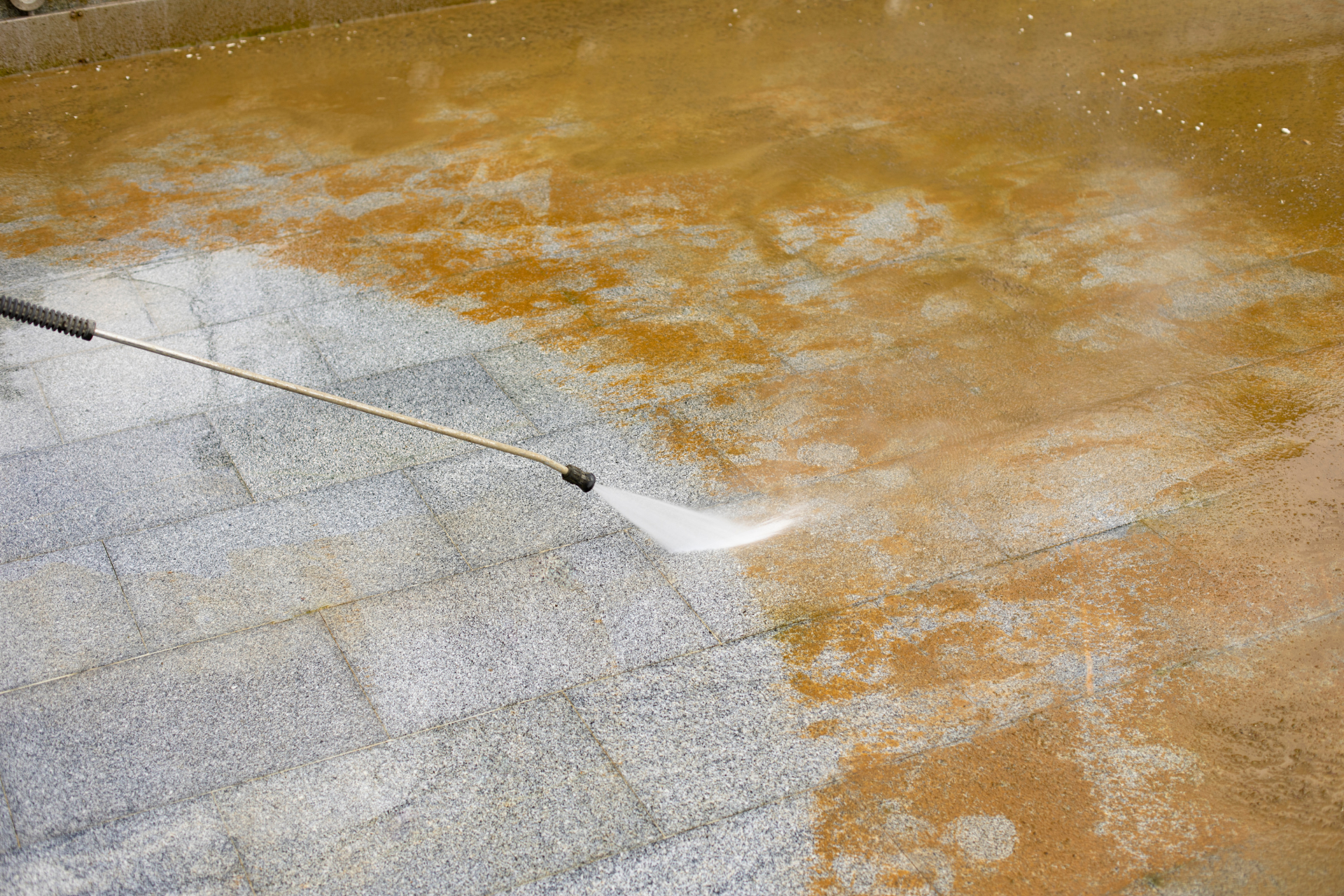
Pressure washing a wet stone patio, with a spray nozzle cleaning orange-stained tiles
April 11, 2026
Discover the most common pressure washing mistakes homeowners make and learn how professional exterior cleaning helps.

Show More